
I Tried Four Fixes for My Thinning Hair. Three Failed for the Same Reason, and It Wasn't My Genes. It Was Blood Flow.
By month three I had a shelf of half-used bottles and a crown that looked worse. Then I read one thing about circulation that made every failure suddenly make sense.
 By Malcolm R. · Operations manager · 38 · Atlanta, GA · Published July 2026
I'm not a doctor and I'm not a writer. I'm a 38-year-old guy who spent three years quietly blaming his father, his grandfather, and his own bad luck for the scalp starting to show through at his crown.
If you've ever stood under a hard bathroom light, decided it's just your genes, and told yourself there's nothing to be done, this is for you. I'm going to walk you through the four things I tried, in the exact order I tried them, and the one idea that finally explained why three of them were never going to do a thing. It's longer than a normal article because I wish someone had handed me the whole story before I lost a year and a few hundred dollars to it.

Step 1. I decided it was genetic, and quietly gave up before I'd even started.
It showed up in the barber's chair. He tilted that second mirror to show me the back, and for the first time in years I actually saw the crown of my own head. More scalp than I'd let myself believe. My stomach dropped, because I knew that pattern. I'd watched it on my dad, and on his dad before him.
So I did the thing that felt like wisdom and was really just surrender. I told myself it was genetic. Coded in. My turn. And if it's written in your DNA, then there's nothing to do but wait and watch it happen, right? That belief was strangely comfortable, because it let me off the hook for doing anything.
What it didn't do was stop the checking. I started angling out of group photos, hunting for the "good side," catching my own crown in every dark window and phone screen. My wife noticed I'd gone quiet about it long before I said a word. "It's just genetics" is a great excuse for not acting. It is a terrible way to feel every single morning.

Step 2. I finally tried three things. Every one of them let me down.
Eventually the dread got loud enough that I acted. I bought the expensive thickening shampoo first. It sits on your head for twenty seconds and rinses straight down the drain, and I later understood why that was pointless: it coats the strand, the part that's already grown, already basically dead. Makeup for your hair, not care.
Then biotin, a whole cabinet of gummies and pills because a YouTuber wouldn't shut up about them. Here's what nobody told me: biotin supports keratin, the protein hair is actually made of, so it's a real hair-health ingredient. But for a guy who wasn't deficient in it to begin with, most of what I swallowed just went straight through me. It was never the growth switch the label made it feel like.
Last, minoxidil, because everyone online swore by it. Three weeks in my scalp was itchy and flaking, and the drain, the exact thing I was trying to fix, had more in it, not less. The "dread shed," they call it. And then the line that stopped me cold: if you ever quit, you hand it all back. Use it forever or lose it. That wasn't a road I wanted to be chained to. By month three I was ninety-something dollars lighter and more convinced than ever that it was genetic and hopeless.

Step 3. Then I learned it was never really about my genes.
One more 1am rabbit hole, except this one went somewhere. I stopped reading about products and started reading about how hair actually thins in the first place. And it quietly took my whole excuse apart.
Thinning doesn't start with the hair you can see. It starts underneath, at the scalp, where every strand grows out of a tiny follicle. That follicle isn't a machine that runs on your DNA alone, it's living tissue, and it depends on a steady supply of blood carrying oxygen and nutrients. When circulation to the follicle drops off, the follicle can slowly shrink, a normal biological process called miniaturization. It keeps making hair, but finer, shorter, weaker each cycle, until a whole area just reads as "thin." Genetics can load that gun, sure. But the follicle still lives or struggles in the environment around it, and that environment is not fixed in stone the way I'd told myself it was.
That single idea took every failure apart. The shampoo treated the strand. The biotin fed a strand that was already on its way out. Even minoxidil only works on a rented, use-it-forever basis. Not one of the three touched the thing underneath: the scalp, and the blood flow the follicle actually lives on. I'd been throwing money at every layer except the one that decides the whole game. Three years of “it's just genetics” and I'd never once looked at the layer I could do something about.
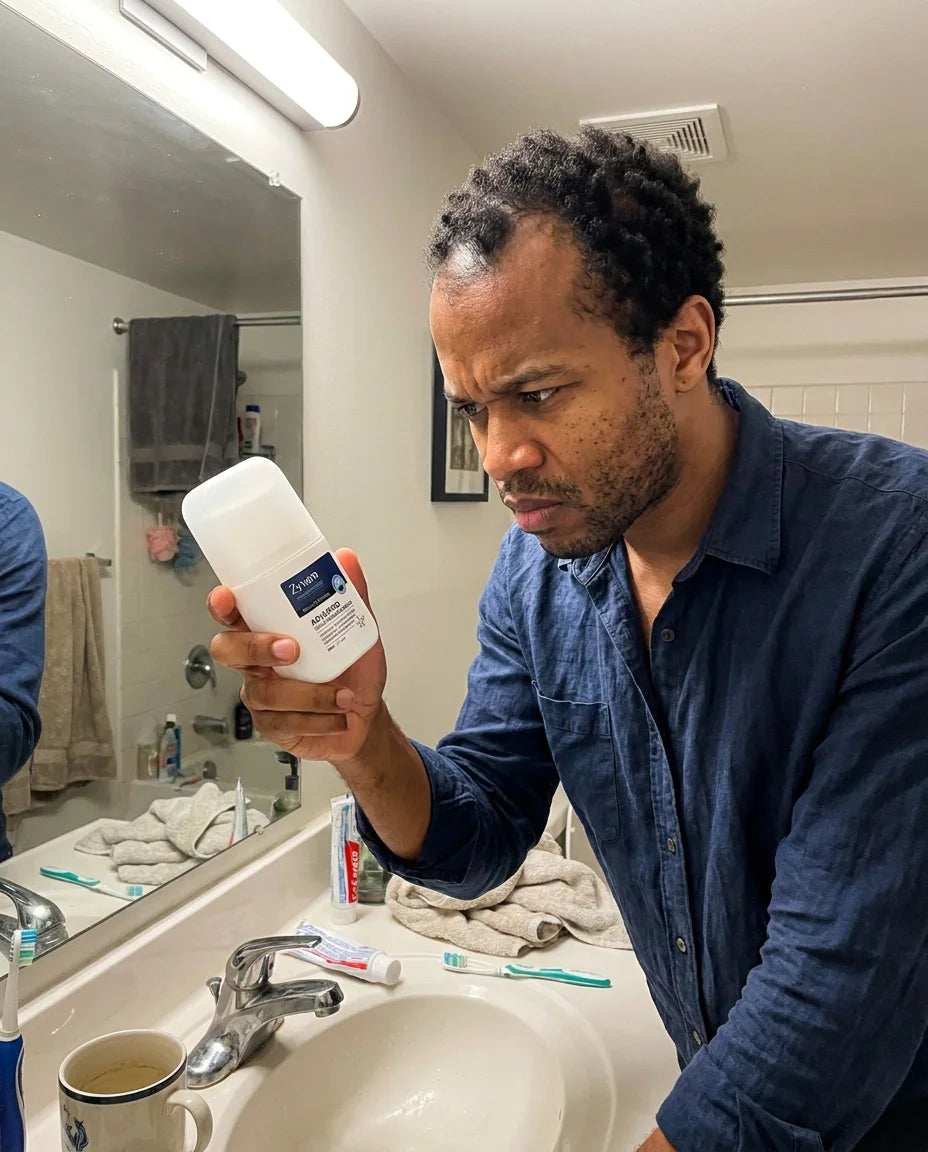
Step 4. Then I found the rosemary research, and got quietly furious.
Same rabbit hole, one more paper. A randomized study from 2015 where, in that one study, rosemary oil performed comparably to minoxidil 2% over six months, with less scalp itching than the drug. Rosemary. The herb in a Sunday roast. I read it three times sure I'd misread it. And the part that made it click for me: rosemary is one of the ingredients often described as supporting healthy circulation at the scalp, which lined up exactly with the blood-flow piece I'd just spent a night learning.
Then the anger arrived, because once you see it you can't unsee it: you can't patent rosemary. There's no fortune in telling a grown man to work a cheap herb into his scalp before bed. There's an enormous one in a foam or a pill he refills every month for forty years. So the herb doesn't get the marketing budget. It just sits in a 2015 paper nobody ever sent me.
And unlike the shampoo, it isn't something you rinse off in twenty seconds. You leave it on the scalp, the exact layer I'd finally figured out I'd been neglecting. That's how I found STAGROOT, rosemary + biotin in a lightweight, no-rinse oil. Thirty seconds a night, no pills, no prescription. I was skeptical as hell, I'd already been burned three times. But there was a 30-day money-back guarantee, so the honest answer to "what do I have to lose" was: nothing.
“Genetics was the most expensive excuse I ever bought. The follicle doesn’t care about your family tree. It cares about what actually reaches it.”

Step 5. I stopped hiding my crown. That's the whole ending.
Week one, nothing. Week three, the drain that had a dark tangle in it every single morning for two years came up thin. Fewer strands, and I wasn't imagining it. By week six my barber, same guy, same chair where this whole thing started, ran his hand through the top and asked what I'd changed. Because it looked fuller, sat better, and I'd stopped shedding all over his cape. “Whatever you're doing,” he said, “keep it up.”
Three months in, my hair looks fuller, there's far less in the drain, and I've stopped dodging the camera. I got tagged in a photo from a work offsite last month, shot from behind, the exact angle I'd have died over a year ago, and I didn't flinch. Thirty seconds a night, on the one layer everything else ignored. “It's just genetics” turned out to be the most expensive lie I ever told myself, and I'm done telling it.
STAGROOT vs. the fixes I wasted money on
| STAGROOT | Thickening shampoo | Biotin pills | Minoxidil | |
|---|---|---|---|---|
| What it works on | Scalp, the root | The strand | Whole body | The scalp |
| Rinses off in 20 seconds? | No, leave-in | Yes | n/a | No |
| “Dread shed” phase | No | No | No | Yes |
| On it for life? | Cancel anytime | No | No | Yes, or you hand it back |
| Prescription? | No | No | No | No |
| Guarantee | 30-day money-back | n/a | n/a | n/a |
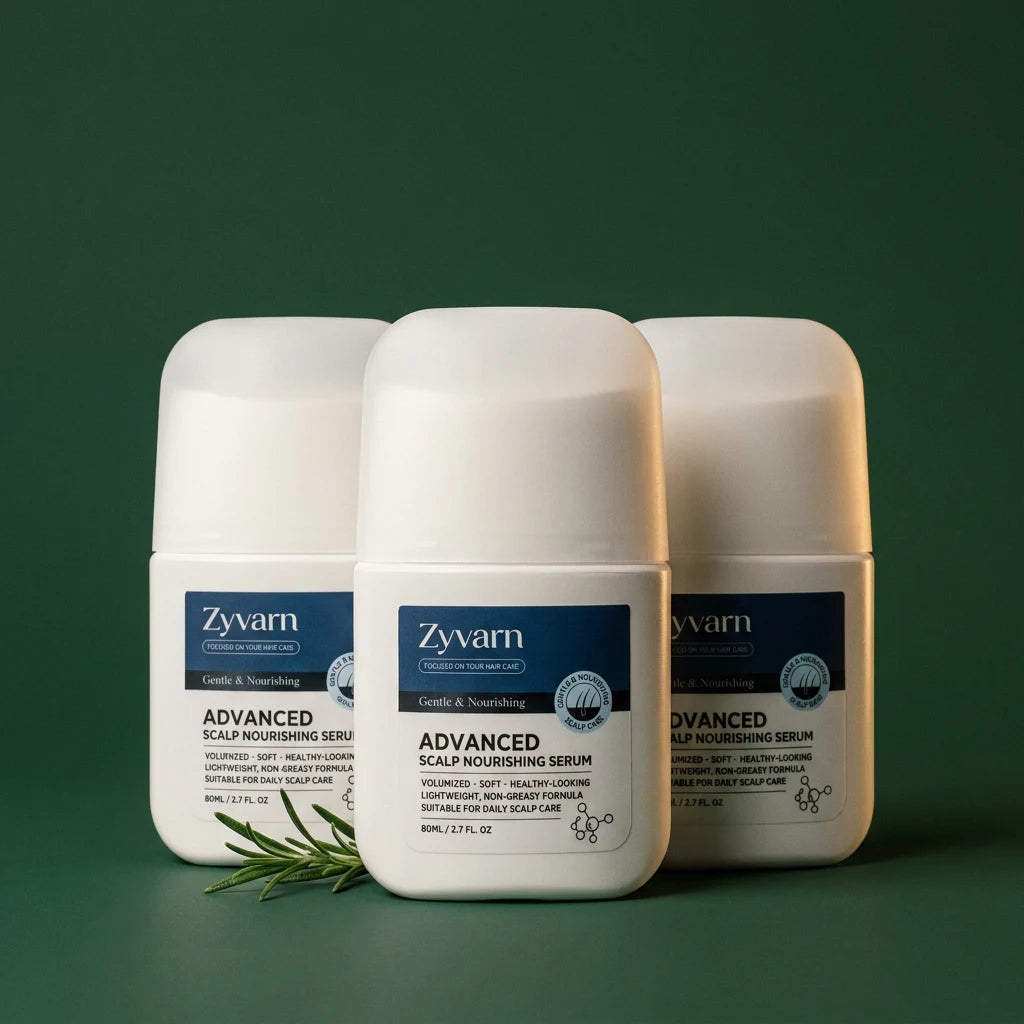
For A Limited Time
Rosemary plus biotin, left on the scalp where it counts. The 90-day supply is up to 65% off MSRP with free shipping. Cancel anytime.
GET 65% OFF →Update, seven months in.
I wrote most of this at the five-month mark. It's seven now. Short version: I still have my hair, I'm still not on a pill or a foam I can never stop, and the bottle lives on the bathroom shelf where I actually see it, which is the only reason a 30-second habit survives.
The thing that stuck with me most wasn't even the hair. It was realizing "it's just genetics" had been my excuse to do nothing for three years, when the layer I could actually do something about, the scalp, was the one I'd never touched. That's the whole story.
About the author
Malcolm is 38, lives in Atlanta, and manages operations for a logistics company. He spent three years certain his thinning was genetic and out of his hands. Learning that wasn't the whole story is the reason he wrote this, the first thing he's ever put in front of strangers.
Quick answers to the questions I get most
What's actually in it?
Rosemary and biotin, in a lightweight, no-rinse scalp oil. The studied ingredient, left on the scalp, without the pill.
How do I use it?
Thirty seconds into the scalp at night. Massage it in, go to bed. No rinsing, no residue on the pillow.
So is it blood flow, not genes?
It's both. Genetics can load the gun, but the follicle still lives on the circulation and scalp environment around it, and that's the part you can actually work on day to day. STAGROOT is a cosmetic oil for the look of fuller hair, not a drug.
Will it regrow my hair?
No, and I won't pretend otherwise. It's a cosmetic oil, not a drug. It helps hair look fuller and reduces the look of thinning. The earlier you start, the more you're working with.
Is it greasy?
No. It's a lightweight gel-oil that absorbs fast, the whole point is that you'll actually keep using it.
What if it doesn't work for me?
You're covered by a 30-day money-back guarantee. If your mirror doesn't change, email us and you get a refund.
What other guys said
4.8 average from 2,000+ men. Pulled from the STAGROOT product page.
 🌱 Jerome P.★★★★★
Spent years assuming it was just my genes and nothing would move the needle. Fewer strands in the drain within a month, and it sits fuller on top.
 🌱 Damon C.★★★★★
Came off minoxidil because the shedding freaked me out. This is way easier, no grease, and I'm not tied to it for life.
 🌱 Terrence H.★★★★★
My barber asked what I changed. That's the whole review.
 🌱 Nathaniel W.★★★★★
Figured that ship had sailed at my age. Noticeably less shedding and the top looks fuller than it did.
 🌱 Chris B.★★★★★
Wasted money on 'thickening' shampoos that rinsed straight down the drain. First thing where I actually noticed a difference in the mirror.
 🌱 Vincent A.★★★★★
The 30 seconds at night is the only reason I've ever stuck with anything. Crown looks fuller and I've stopped angling away from cameras.
Advertisement. Individual results vary. STAGROOT is a cosmetic scalp and hair oil, not a drug, and is not intended to treat, cure, or prevent any condition. It does not regrow hair or reverse follicle miniaturization, it helps hair look fuller and reduces the look of thinning. Descriptions of blood flow and follicle biology are general education, not claims about what STAGROOT does. The 2015 study referenced relates to the rosemary ingredient, not to STAGROOT specifically. © 2026 STAGROOT. All rights reserved.